



The last thing a room needs, and the first thing people notice.
A beautiful room with bare windows still looks unfinished.
Windows are the last thing most people deal with. The walls get painted. The furniture arrives. Then the budget runs out and the windows stay bare.
The room never quite settles. Sound bounces. Light glares at the wrong hour. And the eye keeps landing on a hard rectangle of glass with nothing to soften it.
Store-bought panels rarely fix it. They are made to one length, so they hang short or pool badly, and the fabric gives itself away in daylight.
Four windows, four different answers.
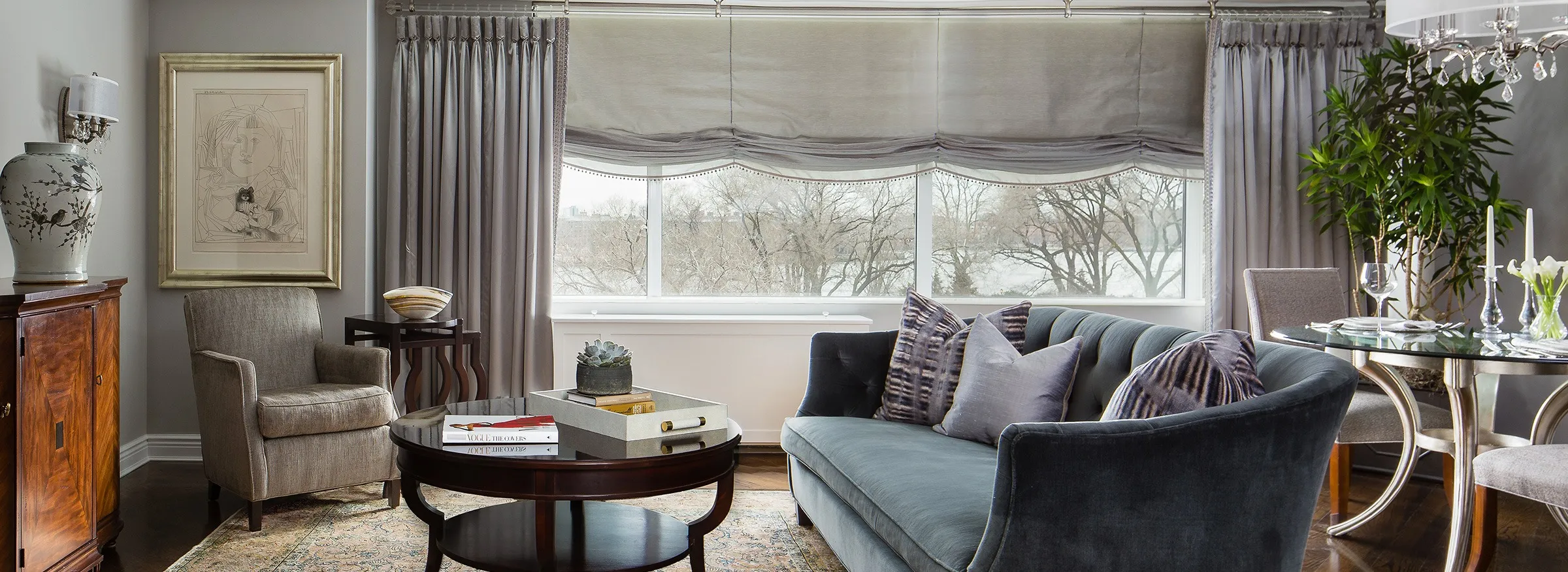
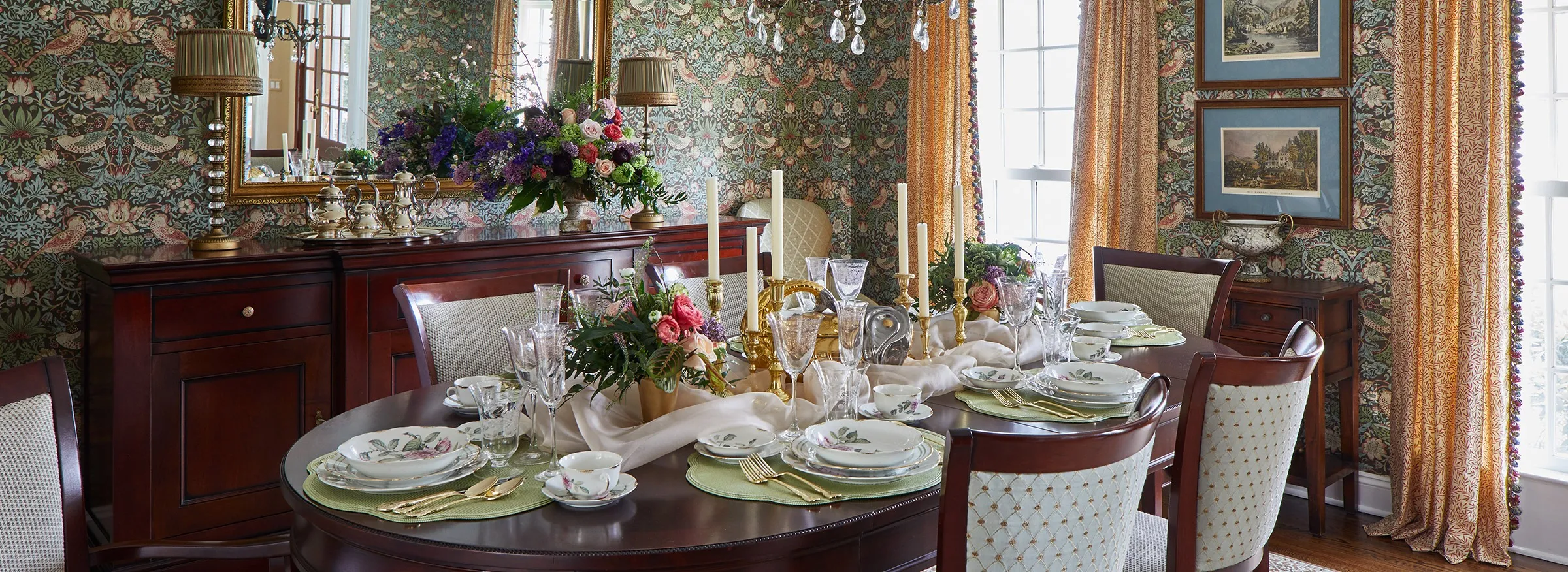
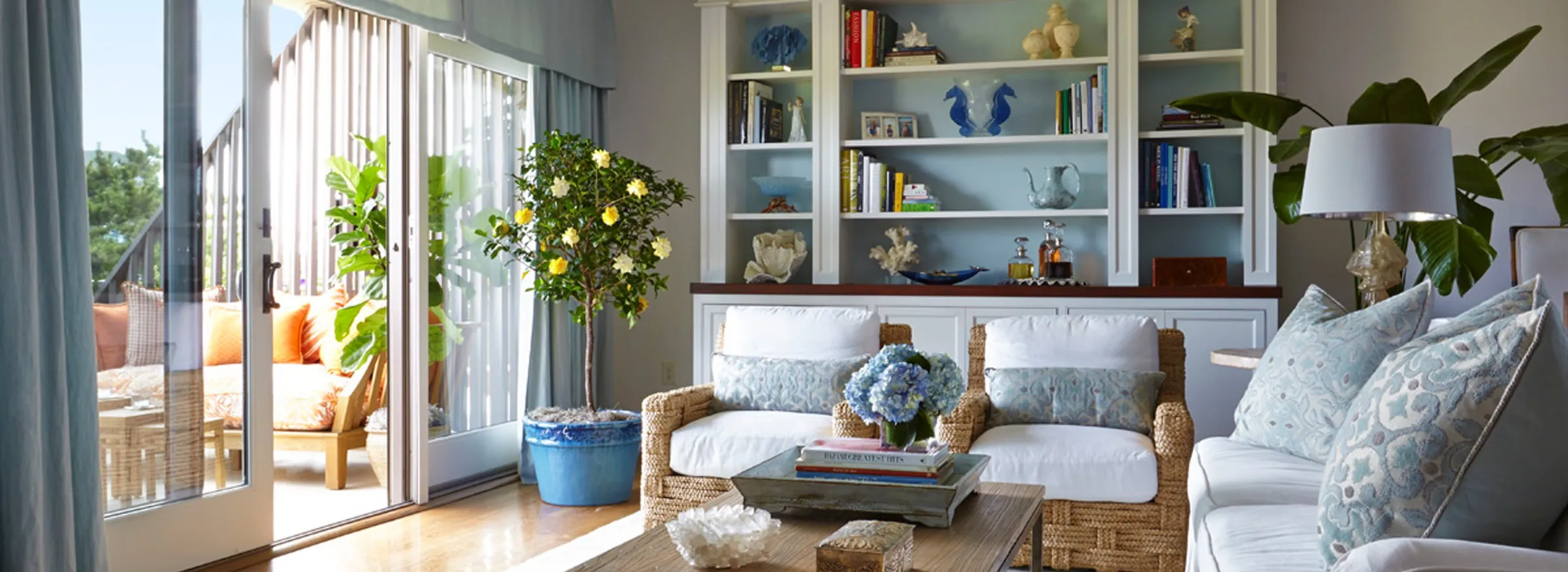
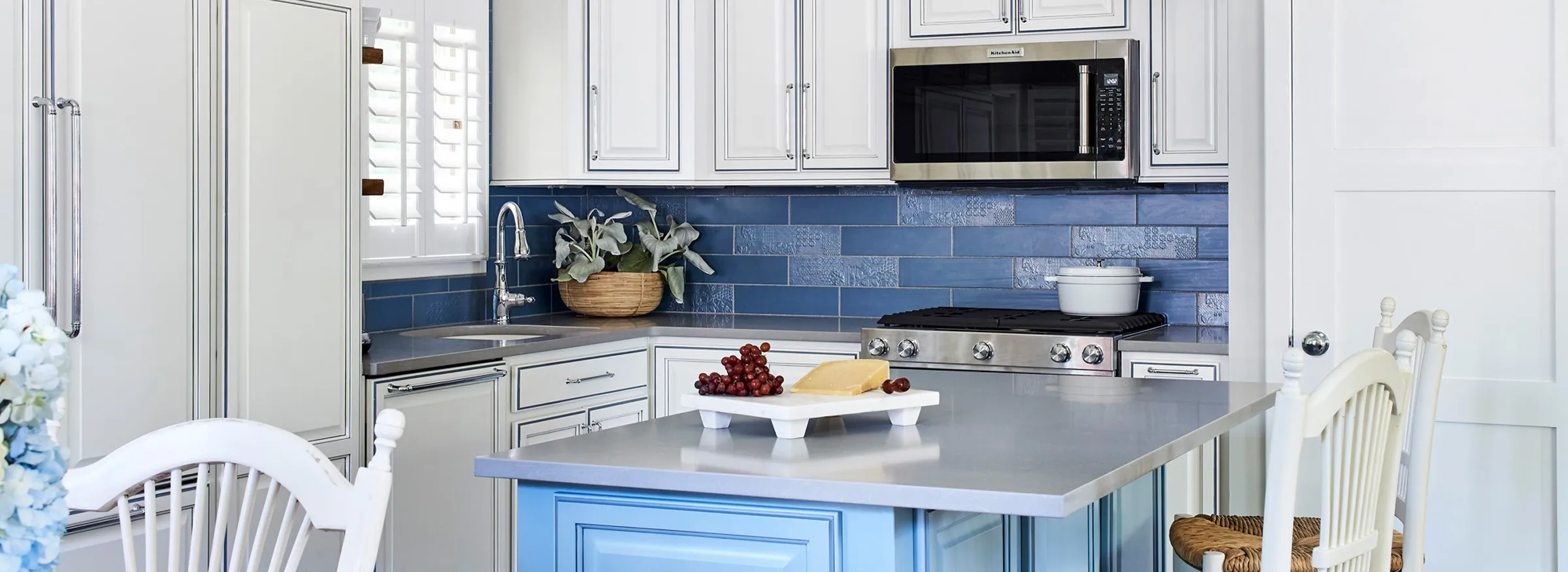
A shade and panels working together. Silk with fringe. A soft valance at a slider, and a kitchen that wanted no fabric at all. All four are from Virginia's earlier work on the East Coast.
Soft, hard, or both in the same house.
Drapery panels
Lined, hung high, and long enough to reach the floor. Panels soften a room and make a window look taller than it is.
Roman shades
Flat or relaxed, in the fabric of your choice. They sit inside the window, so they suit a room where panels would crowd the space.
Woven and solar shades
Natural woven wood for warmth. Solar shades where you want the view kept and the glare gone. Both work on their own or under panels.
Shutters
Built to the window and painted to your trim. The right answer for a kitchen or a bath, where fabric is a poor idea.
Top treatments
Valances, cornices, and pelmets. They finish a window and hide the hardware. Used carefully, they are what makes a room look designed.
Hardware and motorisation
Rods, rings, brackets, and finials chosen to match the metals in the room. Motorised tracks where the window is tall or hard to reach.
Three steps, measured on site.
Measure
Every window is measured on site. Nothing is ordered from a plan, because a plan and a wall rarely agree.
Select
Fabric, lining, trim, hardware, and mount are chosen together, against the light in your room and the rest of the palette.
Fabricate and install
The workroom makes them to the measurements. Virginia checks the install so the hems hang straight and the panels break the way they should.
Six things, fabric first.
- Fabric, which spans a very wide range per yard
- How many windows, and how tall they are
- Lining and interlining, which decide how a panel hangs
- Trim, banding, and any hand detail
- Hardware, and whether the track is motorised
- Whether panels are functional or fixed
The same window can be dressed three ways at three very different prices. That is a good thing. It means there is usually a version that fits.
Credentials that are checkable
-
Best of Houzz
Service · 2017, 2019, 2020
-
ASID
Allied Member
-
NKBA
National Kitchen & Bath Association
-
FIT
Fashion Institute of Technology
-
Industry Magazine
Featured Designer
Questions about window treatments
Do you make the drapery yourself?
No. Virginia designs it, measures the windows, picks the fabric and hardware, and runs the workroom that makes it. She is there for the install. That split is normal for designer drapery, and it is why your fabric choice stays open instead of being limited to one supplier.
What do custom window treatments cost?
Fabric drives it more than anything else, and fabric ranges enormously. A room of simple lined panels and a room of interlined silk with hand trim are not close. Virginia gives you a real range once she has seen the windows. The first visit is free.
Can I do window treatments without a full design project?
Yes. Some clients bring Virginia in for windows alone. It is one of the fastest ways to change how a room feels without touching a wall.
How long do they take?
Plan on several weeks from the day the fabric is ordered. Fabric has to arrive before the workroom can start, and a special-order fabric can be the long pole. We give you a date once the fabric is confirmed.
Should panels touch the floor?
In almost every case, yes. A panel that stops short of the floor is the single most common mistake in a nice room. We hang high and let them break, which makes the ceiling read taller.
Do you do shutters and blinds too, or only fabric?
Both. Shutters, woven woods, solar shades, and roman shades, as well as drapery. Kitchens and baths often want a hard treatment. Bedrooms and living rooms usually want fabric.
What areas do you serve?
Charlotte and the surrounding communities, including Myers Park, Eastover, SouthPark, Dilworth, Cotswold, Ballantyne, Matthews, Waxhaw, Weddington, and the Lake Norman towns of Davidson and Cornelius. We work by appointment.
Let’s look at your windows.
The first visit is free. Charlotte and the surrounding communities, by appointment.